

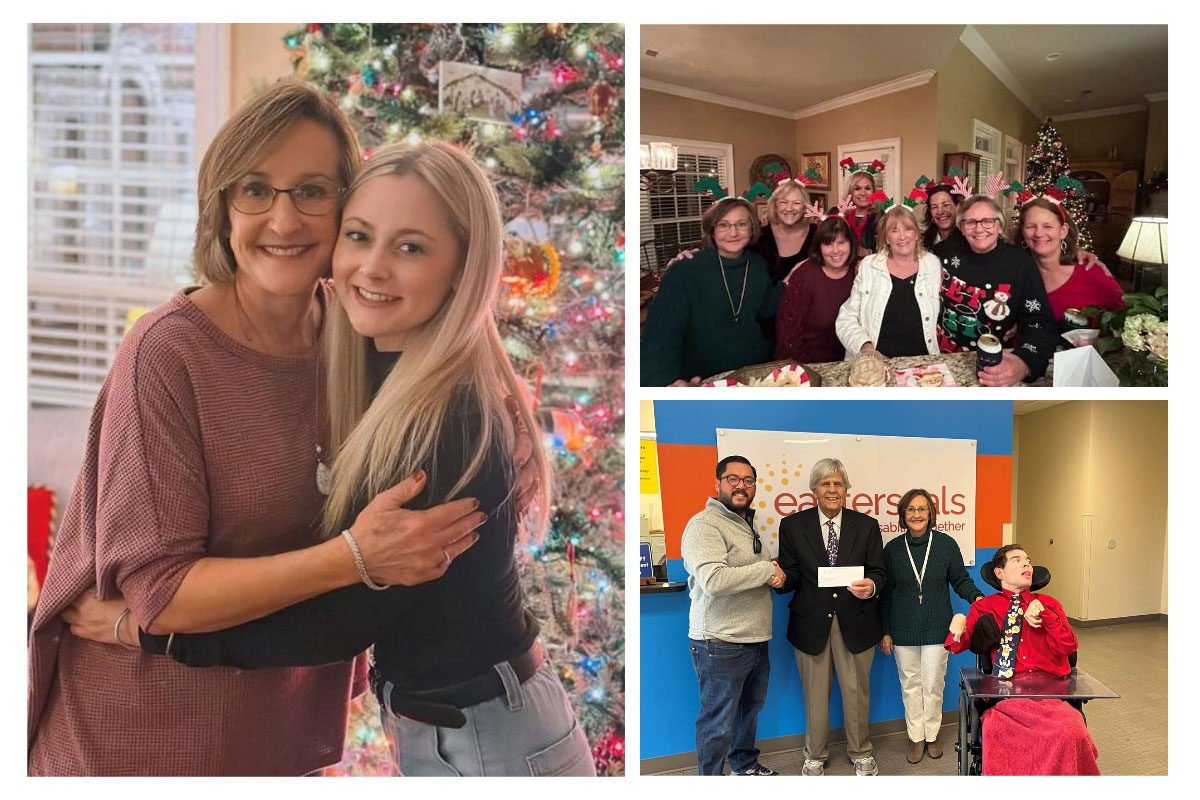
Debbie’s story is one of grit, grace, and grounded purpose. Raised on a 300-acre farm in Pike Road, she spent her childhood immersed in nature, learning independence and imagination that would shape her for life. Horses became a lifelong passion, influencing her values and eventually inspiring a unique hippotherapy program at Easterseals Central Alabama. As a nonprofit leader for over three decades, she’s poured her heart into helping others thrive. But her greatest joy, she says, has been raising her daughter, Lacy—a kind, compassionate young woman now pursuing a degree in social work. Now, as an empty nester and an advocate for aging with purpose, she continues to prioritize health, connection, and service—proving that life’s later chapters can be just as full of energy and meaning as the ones before.
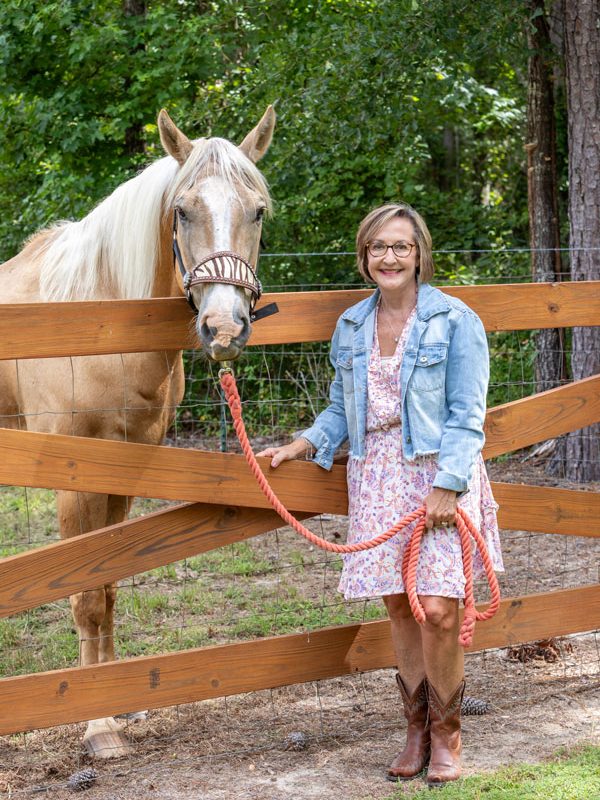
BOOM: You grew up on a 300-acre farm in Pike Road, where The Waters neighborhood is now. What was that like, and how has that upbringing shaped who you are today?
Debbie: Growing up as I did, and where I did, was truly amazing. My sister, Sherry, and I had the kind of freedom most kids today can hardly imagine. We spent our childhood on 300 acres of open land—woods, trails, ponds, and pastures that were ours to roam. Although I was technically born in the last year of the baby boomer generation, I identify much more with Gen X. I often joke that we were the “feral kids”—raised with a kind of independence that would probably alarm modern parents.
On weekends, friends would stay with us from Friday to Sunday—because back then, Waugh was considered “way out.” From the time we got home from school until the sun went down, we were outside. We rode horses, drove the old farm truck when we were barely tall enough to see over the wheel, and spent hours deep in imagination, pretending we were pioneers, runaways, explorers, or whatever story we invented that day. That freedom to explore and pretend wasn’t just fun—it was formative. It taught us how to create our own joy, how to solve problems and get along with others, and how to trust our instincts.
There’s a kind of confidence that comes from being turned loose in the woods with nothing but your imagination and your sibling, and knowing your parents trusted you to find your way home. That childhood shaped me into someone who’s comfortable being independent and someone who sees possibility. It taught me how to think creatively, take initiative, and appreciate the simple pleasures and to appreciate contentment in everyday life.
BOOM: Horses have been a thread throughout your life—from riding as a child to trail rides today. What do you love most about that connection with horses?
Debbie: From the time I was little, I felt a special connection to them. It wasn’t just about riding—it was about the bond. Horses have this quiet way of teaching you things without saying a word. I think horses teach you a lot of life skills.
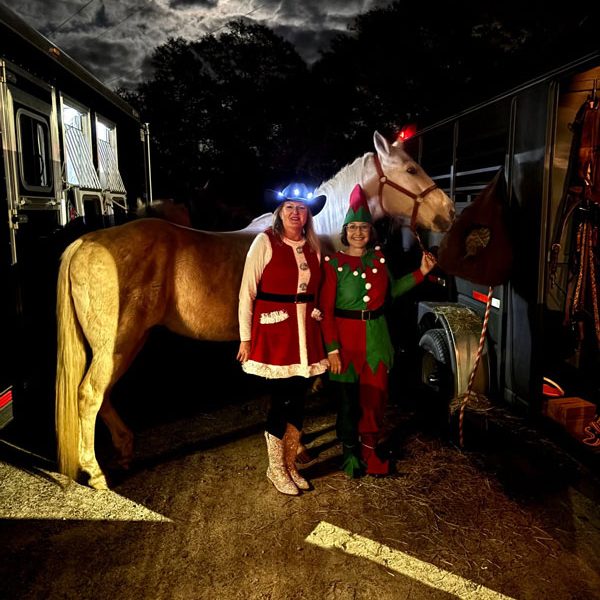
We learned to take care of them from an early age, such as feeding them, grooming them, and mucking stalls. That alone instills a work ethic most kids today don’t learn. You also learn patience, to pay attention, because they pick up on everything—your mood, your energy, even your breathing. I love just spending hours brushing them, just being near them. That connection gave me a sense of peace and confidence. When you’re a kid and a thousand-pound animal trusts you enough to follow your lead, that sticks with you. It taught me how to build trust without pushing, how to stay calm when things got tense, and how to be fully present in the moment.
Even now, being around horses feels grounding. There’s something steady and honest about them. That connection shaped a big part of who I am—it helped me become someone who values quiet strength, patience, and paying attention to the things that aren’t always said out loud. That connection motivated me to give that same experience with horses to my daughter. I wanted her to learn those same lessons from horses that I did.
Although she doesn’t ride very much anymore, it got me back into riding in my forties, and I am so glad that I did. It has given me a fun outlet and activity to do with dear friends. I hope to be like Queen Elizabeth and continue to ride in my 90s.
BOOM: You’ve even found a way to bring horses into your work at Easterseals. Can you tell us about how that came to be and what role they play in therapy?
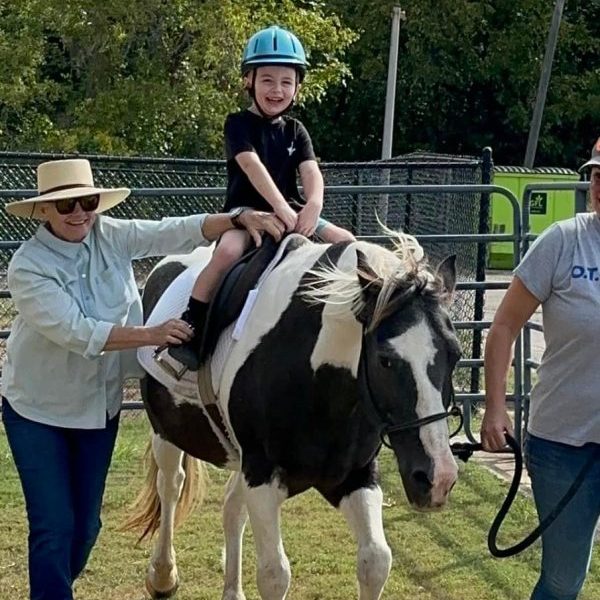
Debbie: It has been wonderful being able to offer such a special opportunity to our kids participating in occupational therapy. I was approached by a friend and CEO of Easterseals Alabama, who knew someone who wanted to start a hippotherapy program similar to the program offered by Red Barn in Shelby County. Her name was Anne Alan Duncan. We met, and the rest is history.
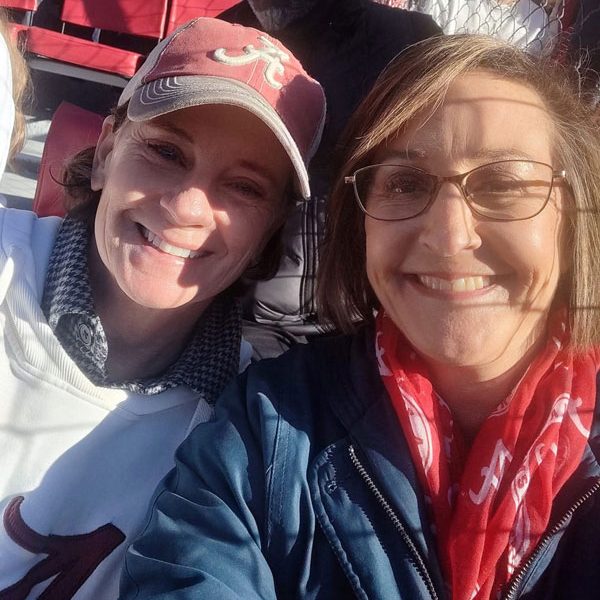
We started the Easterseals hippotherapy program in 2020. Thanks to the Central Alabama Community Foundation, we have completed hundreds of sessions with over 20 kids, and thanks to the Kiwanis Club of Montgomery, for our covered arena located in our parking lot.
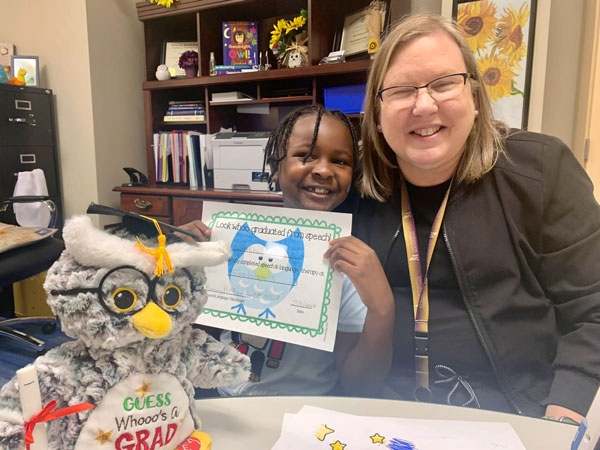
I also want to make the distinction that hippotherapy is not a therapeutic riding program. We are not teaching kids how to ride. These kids are meeting their occupational therapy goals utilizing a horse, like you would a balance beam or trampoline. I get chills when I talk about the program and the results we’ve had with these kids. Many of whom are significantly delayed and/or have a diagnosis of autism. Some of our kids have accomplished goals for the very first time, sitting on a horse. Some even say their first word, telling the horse to go or to whoa. This program is unique to this area, and many of our kids would not have the opportunity to participate in such a program.

I tell people all the time that horses are truly magical. This program illustrates just that. Horses have an innate ability to provide immediate reinforcement, which motivates some of our more challenging kids to get great results from hippotherapy.
BOOM: You’ve been in non-profit leadership for 33 years. What drew you to that world, and what keeps you passionate about it?
Debbie: I have to give credit to a very close friend of mine, Judge Mark Kennedy, who was married to my first cousin and who sadly passed away last year. He hired me right out of college to work on his campaign for a seat on the Supreme Court of Alabama.
Not long after winning his campaign, he created a statewide foundation called the Corporate Foundation for Children and hired me to be its first Executive Director. He envisioned it to be a private fundraising arm to the agency that was then called The Children’s Trust Fund of Alabama, now the Alabama Department of Child Abuse and Neglect Prevention. I was there 14 years, and we became the largest private donor to the state’s child abuse and neglect prevention agency and to its network of grantees.
In 2006, I went to work as the Executive Director for Easterseals Central Alabama, and I have been here for 19 years. Working in a non-profit was not what I had envisioned for myself.
I had originally thought that I would stay in the political realm, but sometimes God has other plans. Working in the non-profit world has never felt like just a job to me. There’s something deeply fulfilling about knowing your time and energy are going toward helping people, strengthening communities, and trying to make the world a little better.
What drives me most is the chance to be part of something bigger than myself. In non-profit work, you get to see the direct impact of your efforts—whether it’s helping someone find stability, creating opportunities where there were none, or simply showing people that they matter. It’s not always easy with resources being very limited, and the needs can feel overwhelming.
With that said, I wouldn’t trade it. I have been privileged to meet some of the best people I know working in non-profit, and I am in awe of their selfless compassion.
BOOM: You’ve served as Executive Director at Easterseals Central Alabama for nearly two decades. What’s something people might not realize about the scope and impact of the services you offer?
Debbie: I think people are always amazed that we do as many programs as we do. We offer eleven programs serving individuals across the life span. We are a leading provider of services to children with autism, offering both speech therapy and pediatric occupational therapy. These programs include specialized programs like food school and hippotherapy. We serve hundreds of children a year, many of whom achieve positive outcomes from their intervention with us.
We also serve adults with disabilities who are interested in entering the workforce. This includes working with high school students, providing them with opportunities to explore careers and the world of work.
People with disabilities have been told all of their lives what they can’t do. Easterseals offers an array of programs that help them see what they can do. We also offer other programs like ASL interpreting, learning disabilities evaluation, a senior adult job training program, and a durable medical equipment re-use program.
year, we served over 2000 people across all programs, primarily from the River Region. Easterseals is a program that builds skills for achieving independence and self-reliance. It offers hope and real solutions. We meet people where they are and help them get where they want to be through personalized support, compassion, and programs that create lasting change.
BOOM: Easterseals serves both pediatric and adult clients, which is unique. How has that shaped your mission as a leader?
Debbie: What makes Easterseals so special is that we get to work with people of all ages, from babies to older adults. That really changes how we think as a team. We’re not just focused on only one stage of life—we get to look at the big picture. It helps us think about how to support someone not just for today, but for the long run.
Because we see people at so many different points in life, we understand how needs can change over time. That helps us build programs that make sense and really last. Whether it’s helping a child learn to communicate or helping a senior feel independent and valued, we get to be part of their story. That’s what guides my work as a leader, making sure we’re thinking ahead, supporting the whole person, and walking with them through every season.
BOOM: As a long-time single mom, what was it like to raise your daughter on your own, and now to step into the new chapter of being an empty nester?
Debbie: Raising my daughter, Lacy, has been my greatest joy. It was difficult at times, but it has been such a blessing. Following my divorce and the death of Lacy’s dad, I could not have done it without family to help. My mom and my youngest, Lori, were incredibly supportive.
I’m proud to say that my daughter is truly one of the best people I know. Watching her grow into a young woman who is not only incredibly talented but also deeply kind and compassionate has been nothing short of inspiring. She’s always had a strong sense of loyalty—whether it’s to her family, friends, or those who are struggling. She shows up fully for the people she cares about, and that unwavering loyalty is part of what makes her so special. I’ve always taught my daughter that education is a powerful tool for women, not just for career success, but for self-reliance.

While I hope she finds a partner who can provide well and support her choice to be a stay-at-home mom, if that’s what she wants, I also want her to know she can stand on her own if she ever needs to. Education gives her options, independence, and the confidence to shape her own path, no matter what life brings.
She’s currently pursuing a degree in social work, with the goal of becoming a therapeutic social worker one day. Her heart is set on helping others through their most difficult moments, and I know she’ll make a difference because she leads with empathy, strength, and sincerity.
Now, as I step into this new season as an empty nester, it’s a mix of emotions. There’s sadness, of course, in the quiet house and the changed routines. I may miss having her under my roof, but I’m in awe of the woman she’s becoming and excited to see how she uses her gifts to serve the world.
BOOM: How did becoming a mother later in life influence your perspective and priorities?
Debbie: I wish I could say that being older made me wiser than younger mothers – it didn’t. I think much like most parents, I felt like I was getting through each day on “wing and a prayer.”
Stepping into a new season of motherhood at my age feels like good timing. At this stage of life, your perspective does shift. You’ve lived enough, grown through enough, and let go of enough to start embracing life in a different way. You’re more grounded, more self-aware, and certainly far less concerned with what others think.
There’s a freedom that comes with age. I think you stop being anxious over trying to be perfect and start focusing on what is meaningful.
This season is about reconnecting with people and things you didn’t have time for while raising children. It’s also about watching your child step into their own life while rediscovering who you are outside of being a full-time parent. You start to make space for yourself again, your interests, your health, your friendships, your joy.
It’s not an ending, but a beginning of a new chapter where you get to keep growing, learning, and showing up in a way that feels true to who you are now.
BOOM: You’ve made health and fitness a priority, working out regularly since 2018. What inspired that change, and how has it impacted you physically and mentally?
Debbie: Back in 2018, I realized I wasn’t feeling like myself. I was overweight, tired, and starting to really feel it, especially in my feet. I developed plantar fasciitis, and every step was a reminder that something needed to change. At the same time, my mother was facing some serious health challenges, and watching what she was going through was a wake-up call. I didn’t want to head down the same path if I could help it.
So I made the decision to start moving more and paying attention to what I was eating. I began exercising regularly and shifted to a high-protein diet that supports my energy and strength. I don’t count every calorie or track every macro, but I do keep an eye on what I eat to make sure I’m getting enough protein and carbs to fuel my body.
Now, I feel better than I have in years. I have more energy, I’m stronger, and I recover more quickly. It’s not just about the physical changes—it’s also been a huge boost mentally. I feel more confident, more focused, and more in control of how I take care of myself. Being consistent has made all the difference, and I’m proud of how far I’ve come.
BOOM: You’ve got some strong friend circles. How important has community been in your personal wellness journey?
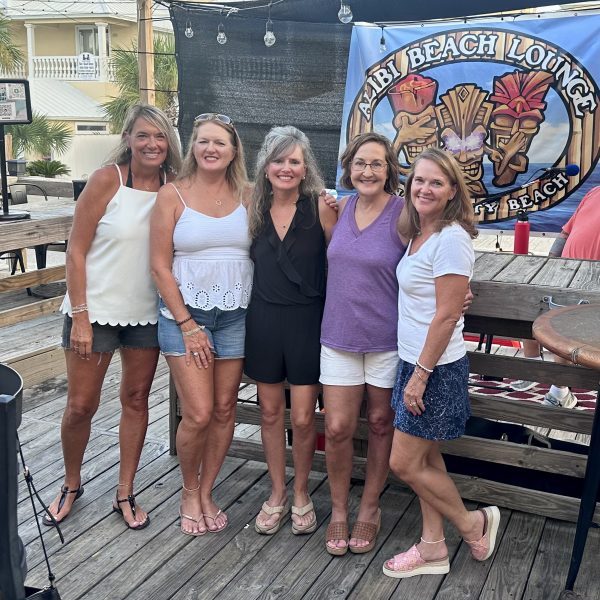
Debbie: I feel really blessed to have such a strong circle of friends in my life. Some I’ve known since high school, others I met in college, some through being a parent, and others through my work. Each group has been part of my wellness journey in different ways. When life gets hard, they’re the ones I can talk to, laugh with, or just sit in silence and feel understood. They remind me I’m not alone, and that kind of support is so important. Good friends help you stay grounded, encouraged, and connected—especially during the ups and downs of life.
BOOM: What’s one piece of advice you’d give to someone in their 50s or 60s looking to rediscover purpose, passion, or health?
Debbie: If you’re in your 50s or 60s, here’s the best advice I can give: don’t take yourself too seriously. Laugh—especially at yourself. Life feels less stressful when you can find the humor in it all.
Find your people. Good friend groups matter more than ever. Surround yourself with people who cheer you on, tell you the truth, and make you laugh until you cry.
Keep doing what you love, even if you’re not the best at it. Dance, paint, travel, ride horses—whatever lights you up. And for the love of all things, stop saying you’re too old. That phrase will cheat you out of some of the best experiences waiting around the corner.
Your energy might change, your knees might hurt—but your purpose, your joy, and your sense of fun don’t have an expiration date.

BOOM: When you’re not working or riding, what’s your favorite way to relax and recharge?
Debbie: Spending time with family and friends is my favorite way to unwind. This fall, I’m especially looking forward to a cruise to Alaska with my sister and two of my first cousins—we’ve been planning it for a while, and I can’t wait. I also love to read and try to carve out time for it whenever I can. A good book, some quiet time, and good company—that’s my kind of recharge.
BOOM: What do you love most about living in Pine Level and the greater River Region?1
Debbie: Having grown up in Pike Road, I wanted to get back to living in a small community. Although it is not exactly the same, it still feels quiet and peaceful.
I’ve come to realize that feeling at home isn’t just about having a lot of space. It’s about knowing the people around you and feeling connected. When I moved here, I hadn’t had my daughter yet, but I knew I wanted to raise any future children in a place where they could grow up with a strong sense of community. I pictured my children going to school with the same kids they’d see at church, forming friendships that would last, and being surrounded by familiar faces who cared about them. Even though the pace is a little different now, the things that matter most like community, relationships, and enjoying the simple things are still very much the same.
BOOM: Looking back, what are you most proud of — both personally and professionally?
Debbie: Of course, my greatest accomplishment is my daughter. She is becoming exactly who God wants her to be, and that is wonderful to see.
Professionally, I believe that the story is still incomplete. Professionally, I hope one day to leave behind an organization that’s not only strong today but positioned for tomorrow. We’ve worked hard to build sustainability both in mission and in resources. I’m proud that we’ve created a financial reserve that will help ensure that Easterseals Central Alabama continues serving people with disabilities for another 65 years and beyond. Knowing that the work will carry on, long after I step away, is one of the greatest rewards of my career.
BOOM: What does “aging with purpose” mean to you at this stage of life?
Debbie: Aging with purpose means living each stage of life with intention, connection, and meaning. It’s not about slowing down but about choosing what matters most and staying engaged in ways that keep your mind, body, and spirit strong.
It means nurturing relationships with people who lift you up. It means doing work, whether paid or volunteer, that gives you a sense of contribution. It’s finding time for movement, prayer, laughter, and rest. It’s knowing that your value doesn’t fade with age. It deepens.
Aging with purpose is about showing up for your life and not just going through the motions. It’s staying curious, staying kind, and staying true to who you are, while making room for growth and joy in every season.
We want to thank Debbie for sharing her story with us this month. If you have comments or suggestions about our cover profiles, including nominating someone, please text Jason Watson at 334.328.5189 or email jason@riverregionboom.com.