
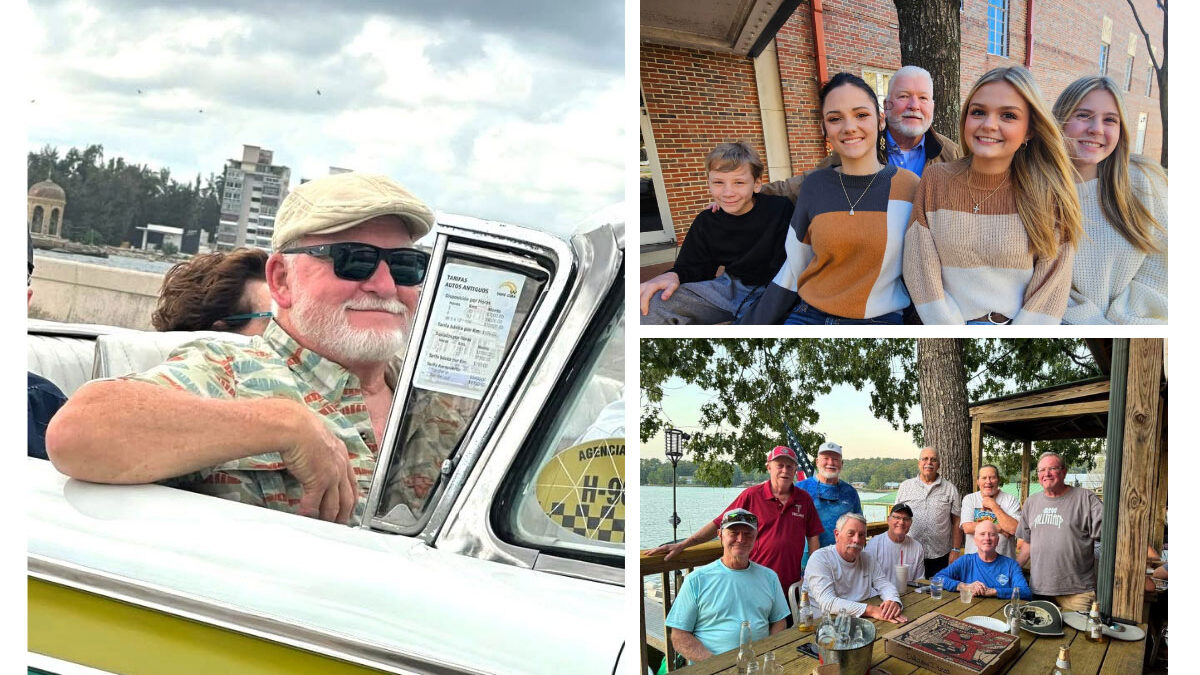
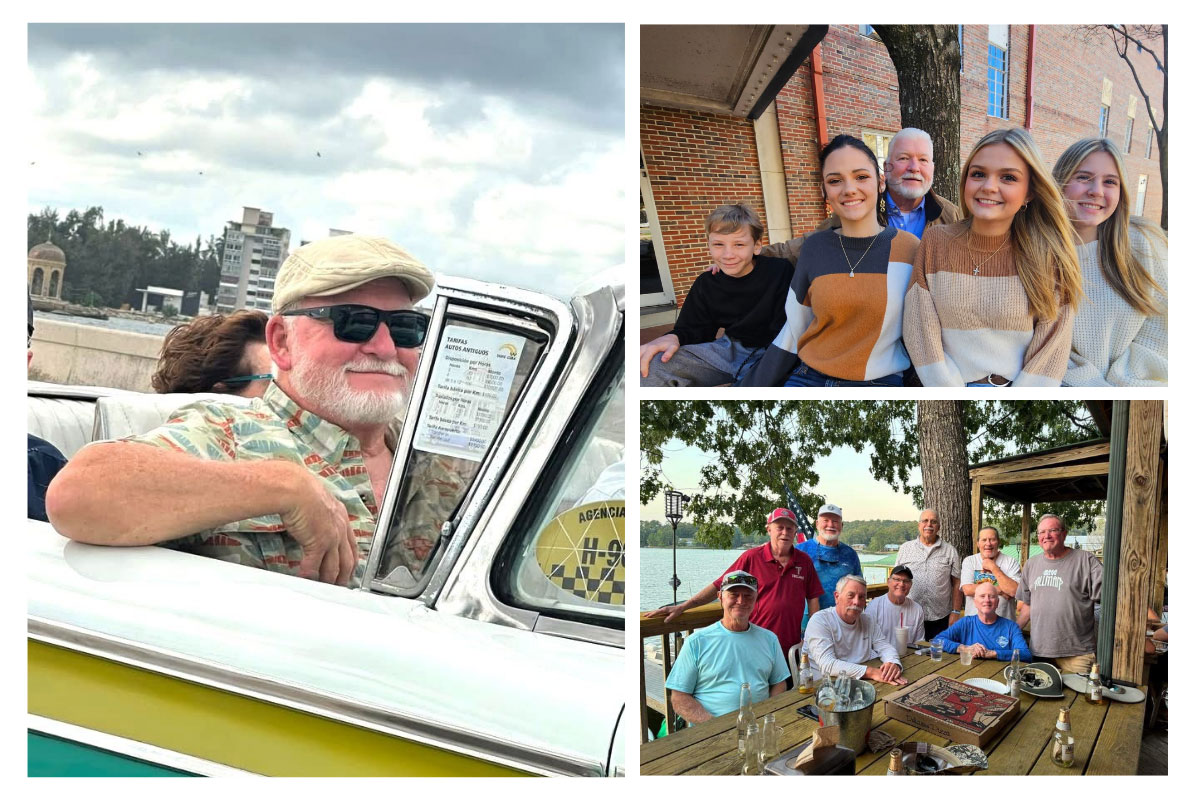
Steve Straughn isn’t spending 71 watching life from the sidelines. He’s playing music, serving his community, exploring Alabama backroads, spending time with family, and still looking for what might be around the next corner. He carries with him a deep appreciation for how precious life is and lives by the idea that “a body in motion stays in motion.” For Steve, aging well means staying curious, connected, and fully engaged in the life in front of him.
BOOM: At 71, you’ve said that rarely does a day go by when you don’t have a project or something you’re involved in. You live by the idea that “a body in motion stays in motion”—and you believe that applies to the mind as well. Where did that philosophy come from, and how does it shape the way you live today?
Steve: The idea that “A body in motion stays in motion” has been a mantra that I picked up over many years, stemming from my work as a CRNA (Certified Registered Nurse Anesthetist). For the past 45 years, I have interviewed thousands of patients in regards to their medical history and the types of activities they do on a daily or regular basis.
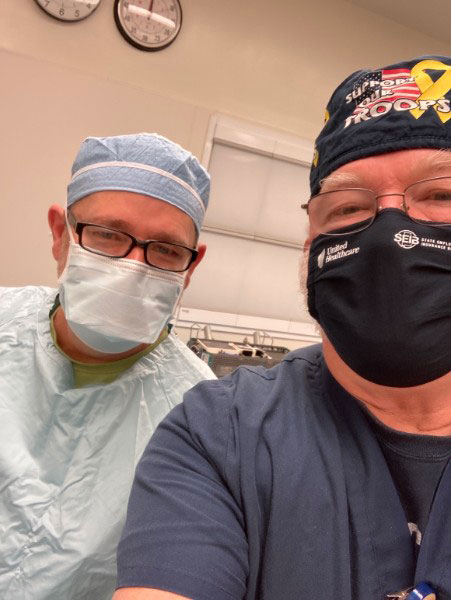
A very important part of my job has been to obtain a very thorough history of each patient prior to providing a safe and reliable anesthetic, based on their overall health status and activity level, as well as their mental status. Somewhere along my journey, it became very apparent that individuals who remain active live longer, healthier, and happier than those who choose to live a mundane and sedentary lifestyle. As a result, I chose to adopt this mantra for myself and made it my everyday mantra.
BOOM: Your journey has taken you through a 12-year career in the Navy after earning your nursing degree from Troy, years in Northport, and eventually back to the River Region. What experiences along the way have most shaped the person you are today?
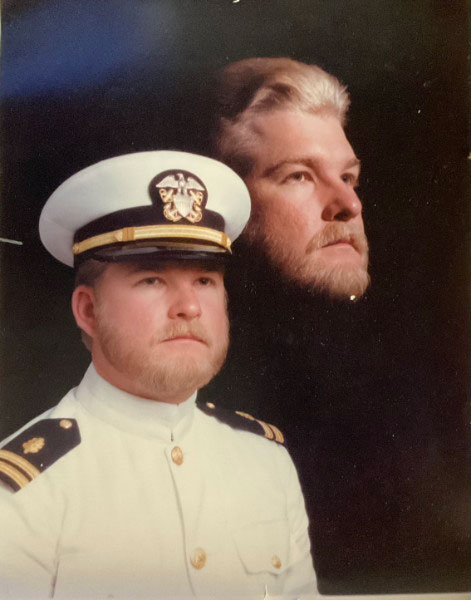
Steve: First of all, let me say that Troy State University provided me with an excellent education, not only in the classroom and clinical experiences, but also in life. “Go Trojans!” I was very active in my fraternity, a charter member of the Sigma Tau chapter of Lambda Chi Alpha. The brotherhood that I experienced during those years was very instrumental in shaping me to be who I am today. Our ritual used biblical scripture as its basis for all of the teachings during the ritual process. I still remain in close contact with at least 10-15 brothers who were at Troy during my time, as well as others who became brothers after I graduated.
After Troy, I worked in Mobile for a few years and was planning to further my education in a nurse anesthesia program at USA, but unfortunately that didn’t work out because the program closed. I chose to join the Navy and pursue my graduate degree through the Navy Nurse Anesthesia Program, in conjunction with George Washington University Medical Programs.
The years I spent as a Naval officer had a major impact on who I was to become, both professionally and mentally. Having the pleasure of serving in several hospitals throughout the Southeast U.S., I was exposed to many people from all over the nation. Yes, there are great people from all parts of the country that mentored me throughout my Naval Career.
Serving with the Marine Corps (Naval Medical Component) in a “MASH” type field hospital on the Kuwaiti border had a huge impact on how I should view everyday. “Every day is a gift.” It became very clear that we should look at every day as potentially being your last day.
Life is precious; use it wisely. Returning to civilian life after the Navy, armed with an excellent education and experience, I felt very proud of the fact that the Navy had prepared me well for the next chapter in my life.
My naval experience had prepared me well both as a person and as a competent healthcare provider. My civilian career has spanned over the last 33 years, first in Memphis at the Regional Medical Center Trauma hospital, as well as a few other metro area hospitals, including St. Jude Children’s Hospital. Once again, taking care of individuals who were severely injured, sometimes losing their lives in front of me, helped me to reaffirm that every day is precious.
Over the past 27 years, I have had the pleasure of taking care of patients at Northport Medical Center. The staff in the operating room are not just co-workers; they are my extended family. The camaraderie that I have experienced there has been extremely fulfilling and helped me through many seasons of change. The friendships I have developed with those co-workers have been most valuable and rewarding. While living in the Northport/Tuscaloosa area, I had the fortune of playing in several different bands, from classic rock to zydeco and even blues. There are some great musicians in that area.
BOOM: You and Lee moved to Pike Road in part to be closer to your children and grandchildren. What has being physically closer to family added to your lives in this season?


Steve: Lee and I have been married for 11 years. We both have two children from our previous marriages. My two biological children have lived in the Northport area since they attended the U of A. I was fortunate to have spent a lot of time with my grandchildren there, watching them grow through the early childhood years. Lee got to enjoy them with me for some time during our early years of marriage. Lee’s two biologic children were living in the Tuscaloosa area also during our early marriage years, as they were in college as well. They eventually moved away as they started their adult life.
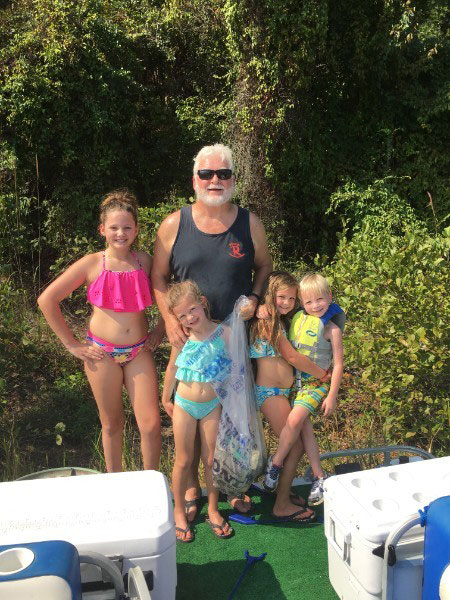
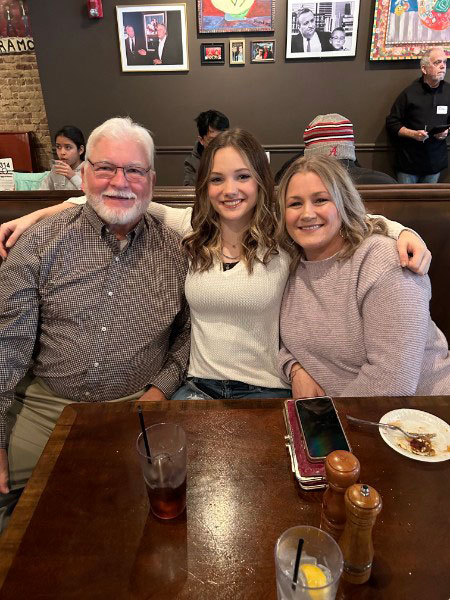
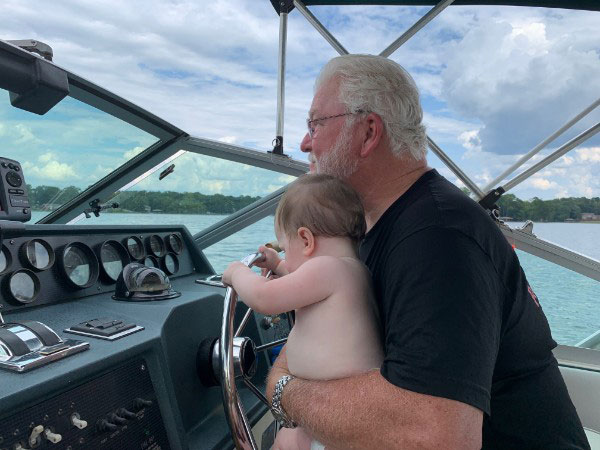
When Amy (Ingram) started her family here in Pike Road, we realized that she would need the help of grandparents (Big Daddy and Mama Lee). Something, maybe divine intervention, told us we needed to be close to her to provide help. So fortunately, we found a very suitable house near them and moved to Pike Road as well. That move has proven to have worked out very nicely for us in many ways. We have connected to the community quickly through the help of new found friends and extended family. We truly enjoy the frequent visits with the youngest grandchildren. They are sweet, sweet little girls that keep us on our toes. Close proximity to them has been just what we had hoped it would be, a complete joy. I still get the chance to visit with the grandchildren in Northport on a regular monthly basis while I am working a few days part-time back at Northport hospital.
BOOM: When you moved here, you knew you needed more than proximity to family—you said you needed the “stimulation” of being involved in a community. Why is staying connected to people so important to you as you get older?
Steve: I must admit that I had some concerns about moving to a new area after 23 years in one geographic location. As a military dependent growing up and as a military officer during the first part of my career, I had never lived in one location for more than 5 years. My time in Memphis, both military and civilian, accounted for a 10-year period.
Before Lee came in to my life, I had been under the impression I probably would continue to live in Northport permanently. Fortunately, our marriage had carried us on a new and wonderful path, to an area that is somewhat familiar to both of us from the past, but yet different because it is new for both of us as a married couple. Having retired from full time work at 62, I knew that I would have to seek other avenues to remain engaged with the community I live in. Pike Road has done a good job of keeping me quite busy.
Multiple studies have shown that retirees who remain engaged in their communities stay healthier and happier later in life, both mentally and physically. Staying “plugged in” has multiple benefits, including opportunities to learn and develop new friendships as well as giving back something to the town you live in. Once again, staying engaged has helped me to look forward to more ways to help our community develop in to a town that is strong and vibrant.
BOOM: That desire led you to become involved with the Pike Road Kiwanis Club, where you’ve just completed two years as President. What has serving through Kiwanis added to your life, and why do you believe civic involvement still matters?
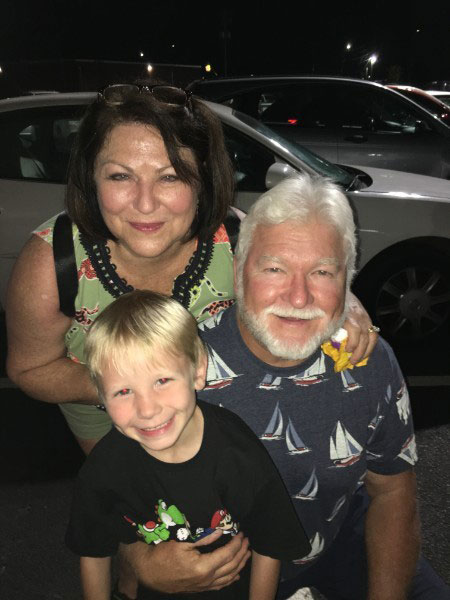
Steve: Lee spent the vast majority of her career working for the State of Alabama. As a result, she has many friends and former colleagues who now live in Pike Road and the surrounding areas. One of those friends, Phil Rawls, knew I was new to the area and invited me to join Kiwanis of Pike Road. I would have never guessed that I would be asked to become the President of the group after being a part of it for just a short time. Becoming a Kiwanis member has really accelerated my growth within the community drastically.
New friendships that have developed by working with individuals that have a servant heart at their core has been very enjoyable. Kiwanis has given me the chance to develop strong bonds with some very fine folks here in Pike Road.
I have certainly learned a lot from our service work in the community, and just how important it is get folks involved in that service. During all of my working years, my crazy hours and schedules would not allow me to participate in service work in a group such as Kiwanis. But now that I am retired, I can devote the necessary time and effort to as many activities as I choose.
BOOM: You’re passionate about encouraging the next generations to become involved in their communities. What would you like them to understand about the value of showing up and serving where they live?

Steve: Obviously, the younger generations are our future. It is incumbent upon us older folks to encourage them to carve out some time away from their work and families in order for them to help shape what they want their community to look like. That participation not only benefits the community; it also sets an example for their children. One day it will be their children that will reap the benefits of their involvement with community service.
BOOM: Faith is an important part of your life, and you’ve said you want your life to be a light and witness for Christ. How does your faith influence the way you approach relationships, service, and this stage of life?
Steve: One of the most profound influences in my life was my grandfather, Leo Roland Straughn, who I am named after. He was the most easy going, honest man that I have ever known. He taught me, by example, to live by the golden rule. Treat everyone how you wish to be treated. Many of the biblical teachings of Christ have that very rule at their core. Personally, it just serves me so well to keep that rule in my heart everyday, no matter where you are or who you come in contact with.
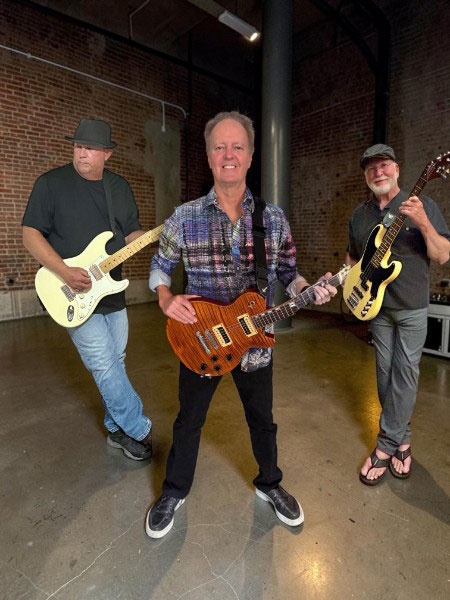
My faith in Jesus and his teachings in the synoptic gospels offer daily guidance in how we should conduct our lives. I believe that to give freely to others, whether that is your time, your service, your gifts, or your willingness to be a friend, is the way in which Christ has set forth the perfect example. While he was on this earth, he gave us explicit instructions on how to love one another. There is no greater way of giving than to be of service to others. I just hope and pray that each day I can be a blessing to someone. To walk in the light of Christ each day is at the forefront.
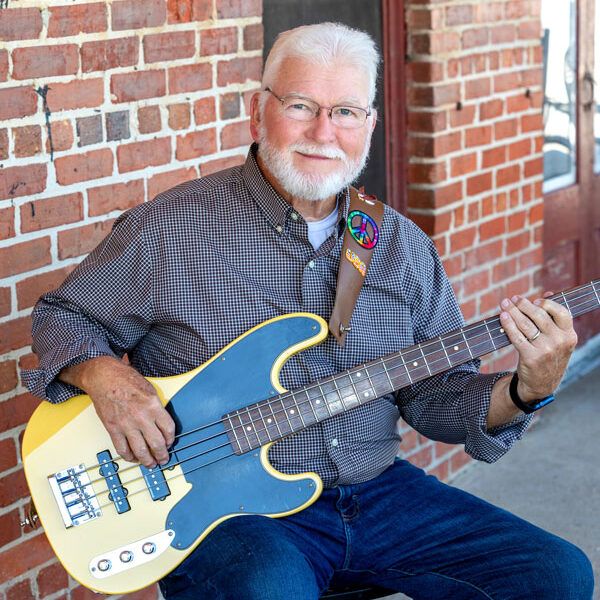
BOOM: Music seems to be another source of joy for you. You play bass with the praise team at Woodland Methodist and recently joined a new band called 3 Strikes. How did 3 Strikes come together, and what is it like to still be making music and trying something new at 71?
Steve: For the past 30 or so years, I have played in various bands that concentrated on anywhere from classic rock, alternative rock, country, zydeco, and blues. The guys I’m playing with now really mix it up, but keep a heavy dose of classic rock on the set list. I haven’t played secular music since I moved to Pike Road in 2022. I was about to think my playing days were over, outside of church.


A few months ago, I had the occasion to listen to a couple of guys out at the Waters on a nice Sunday afternoon. They were quite good musicians, and I really liked their interpretations of many songs that I had played in the past with other bands. So after the show, I approached them to let them know how much I enjoyed listening to them. As a duo, they managed to cover those songs quite well. Just as I was about to leave, I thought, maybe I should ask if they would ever consider adding a bass player to their music performances.
Well, I was bold and put the question out there to see how they’d respond. I was very surprised to hear their immediate response. Yes! We had a great bass player, but unfortunately he passed away unexpectedly a couple of years ago. He was also from here in Pike Road, a retired banker who was quite the musician.
We exchanged contacts, planned a working practice interview, and luckily they gave me an opportunity to join up with them. Formerly, they were known as the JD Express (Jon Youngblood and Doug Simms). As a 71-year-old, I am like a kid with a new toy. Playing music gives me such great joy. My hope is that others seeing me still playing and having a good time doing so will inspire other “seniors” to pick up their instrument and play again.
Another well-known fact is that playing an instrument in older age thwarts mental decline because it exercises your brain in a healthy way. Music is good for the soul and the brain!
BOOM: You’ve experienced the loss of your first wife and later found love again with Lee. You’ve now been married for 11 years. What has this second chapter of marriage taught you about love, companionship, and appreciating the person beside you?
Steve: Wow, the answer to this question could go on forever. I consider Lee to be an absolute gift from God. Having her in my life as a wonderful, caring, intelligent, committed, true partner in this stage of life is just incredible. I never imagined I could be so lucky and blessed to share life with her as my wife. I thank God every day that we are together. She completes my life beyond all measure. Finding happiness in life with her as my partner has been something I never dreamed would happen.
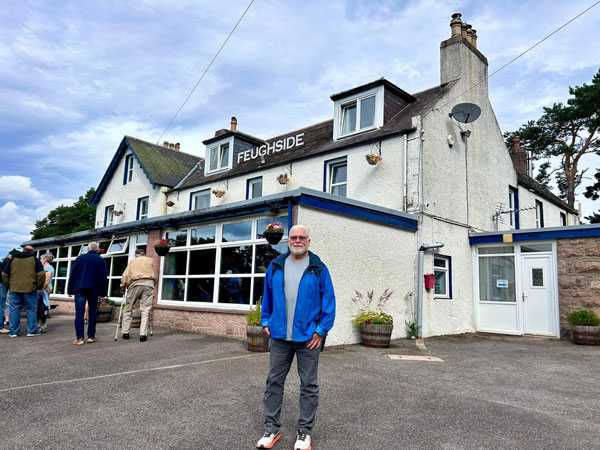
BOOM: You spend much of spring through fall at Lake Martin, but what caught my attention is that you’ll intentionally head in a different direction just to see what you might discover. Where does that explorer’s spirit come from, and what are some of the things you’ve found by simply remaining curious?
Steve: The explorer part of me is definitely in my bloodline. My father was career Army, and he had that spirit of always being ready to explore new places, especially after he retired from the military.
His travels away from home (Covington County, AL) started at a very young age. He left home at age 14 to work in Jacksonville, Florida, to help clear the land that eventually became Naval Air Station Jax, ironically, my first duty station in the Navy. From there, he joined the Civilian Conservation Corps and ended up working in the Northwest, mostly Oregon but other states as well. Eventually, as WWII developed, he enlisted in the Army, spending some 23 years on active duty.
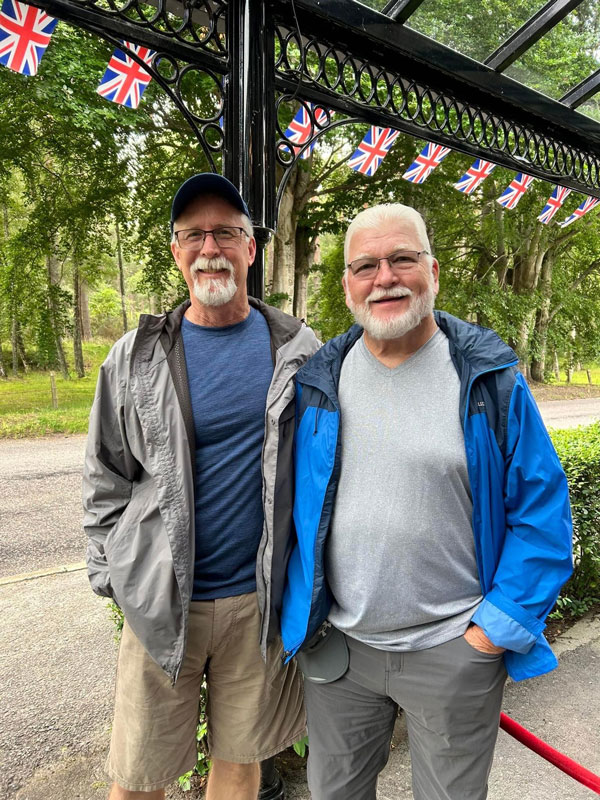
He educated me at an early age about going to new places. When he was serving in South Alabama as a recruiter in the early 60’s, he would take me along with him in the summers on his recruiting route. That probably got me started very well in the explorer mode. After retiring from the Army, he ended up returning to one of his prior duty stations, Fairbanks, Alaska.
During two summers in college, I was fortunate to work there on related Alaska Pipeline jobs, while enjoying the land of the midnight sun. That explorer spirit, going a different way, stopping to learn something about local history, has always excited me. I have always had an inquisitive nature.
Many years ago, I set out to research our Straughn family genealogy. That research led me to discover that for many centuries, my ancestors had traveled constantly in to new areas, serving jobs like river runners, trading and selling goods in South Alabama and in Mississippi, buying land, improving it, and selling it to move on to the next piece of land. Many in Scotland were nomadic clansmen who traveled to fight for or against the king at the time, even opposing Robert the Bruce. Many of them were soldiers and sailors; some were even famous officers in the English Navy. In that spirit, I always look for something different to see, a different road to travel, or a historically significant site in Alabama.
Lee also enjoys genealogy, and we oftentimes ride the backroads of Alabama learning more about where our ancestors lived and what they did for a living. There are some amazing things to learn about and explore right here within 75 miles. I highly recommend that folks get out and learn about the “firsts” that occurred or were developed very near this area.
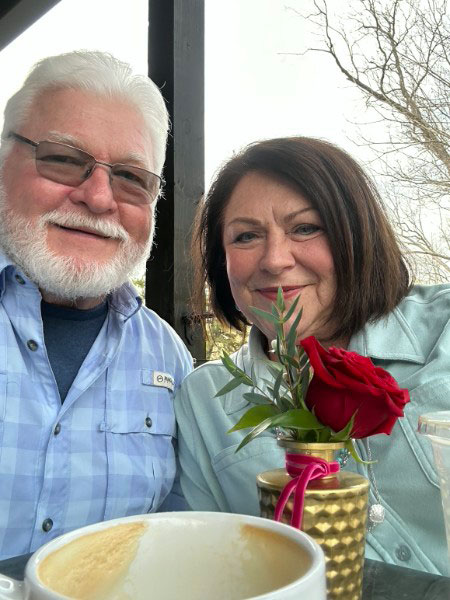
For example, the first medical school in Alabama started in Dadeville, AL; the first helicopter was invented in Andalusia; and the first all-female college in the US was in Lagrange, GA, in 1825. Lake Martin was the largest lake in the world when it was impounded in 1926. The list goes on and on.
BOOM: What does a really good day at Lake Martin look like for you and Lee? Has having that place changed the rhythm of your life or helped you learn how to balance activity with simply enjoying where you are?
Steve: Absolutely, the lake house has created a true respite where our minds can rejuvenate and relax. A great day for us is any day that we can take a long, slow pontoon ride, maybe a stop at one of the lakeside restaurants, and then end the day by watching the sun go down while sitting quietly in the middle of the lake at dusk. Many days the sunset is majestic.
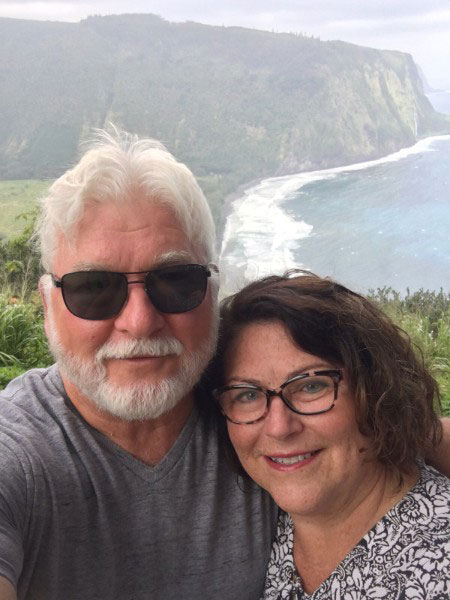
BOOM: You and Lee also love to travel, including trips through Scotland, Ireland, and England exploring your family roots. What was it like discovering that your families’ histories actually intertwined in the same part of Scotland?


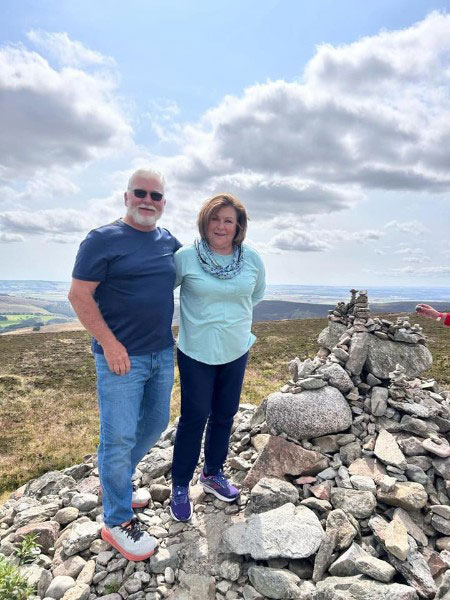
Steve: Well, having both done the research of our family genealogy, Lee and I were aware that many of our ancestors originated outside the area of Aberdeen, Scotland. When we travelled to Scotland and began touring some of the castles, we found historical documentation of the one event that occurred at Dunnottar castle.
Originally, around the 13th to 14th century, that castle was owned by the Keith family, who are in Lee’s ancestral tree. The story goes that one of the Strachans (Straughn) decided to steal away the King’s wife, Isobel; she was actually complicit in the whole plan, and he and his clansmen overtook the castle. The Strachans eventually lost the castle back to King Keith in a legal ruling; however, he kept the wife! There is a historical plaque in the castle today that tells the entire story of what happened. It was a blast to see all of this written down, and we were relieved that it happened centuries ago. The entire time we travelled in Scotland, we felt weirdly like we were at home, like we belonged there.
BOOM: You returned to Ireland for a traditional Irish music tour, spending evenings listening to musicians in pubs along the way. What is it about travel and immersing yourself in other places and cultures that continues to excite you?
Steve: Specifically, traveling to Scotland and Ireland was a tremendous education and journey into why and how our present-day culture has been influenced by these countries. Place names, traditions, sayings, and musical roots all played a large part in how the southern states of America came to be and carried on traditions. The majority of the settlers in these southeastern states, more specifically South Alabama, came from Scotland, Ireland, and England.
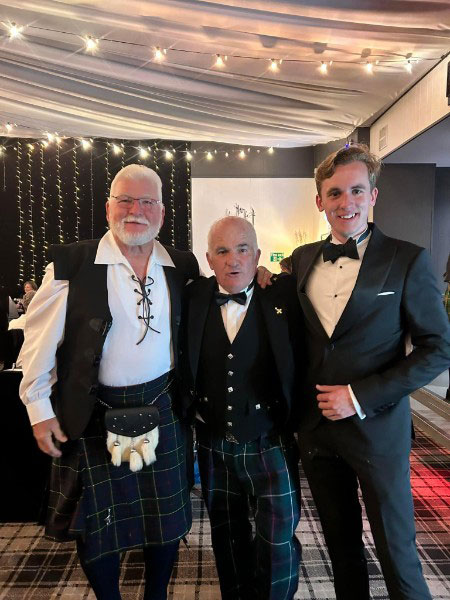
BOOM: Between family, travel, music, faith, civic involvement, the lake, and simply exploring what’s around the next corner, you seem very intentional about continuing to experience life rather than watching it pass by. What does “aging well” mean to you personally?
Steve: To me, aging well means squeezing out every drop of life this world has to give, while you still can. It means watching our grandchildren grow up to be happy and successful people. It means not missing out on going or doing because we didn’t put the effort into exploring, learning, and enjoying every part this life has to offer.
Staying healthy and active is a major part of aging well. We have witnessed too many people who retire, get bored, and become complacent, and then just wither away due to the lack of stimulation or effort to change. This world changes every day, and you have to stick with it and ride the ride of life!
BOOM: Some people reach their 60s or 70s and begin narrowing their world. Yours seems to keep expanding. What would you say to a BOOM reader who needs a little push to get moving, meet someone new, try something different, or rediscover their own curiosity?
Steve: I would encourage people to reflect on what they were passionate about when they were younger. Sure, that may take some adjustments, but maybe seek out a new hobby, try a sport your health can tolerate, join a mahjong group, or join a gym or a church with structured fitness classes. Volunteer at your church. Utilize the Silver Sneakers program.
Maybe return to an activity that you had to give up because of work/family constraints. Maybe find something that you always wanted to learn about but just didn’t commit the time to do it, then pursue it with fervor. Act like you only have one month left to live and try to pack in as much as you can.
Enjoy life to the fullest and make your dreams come true. But always, always, be sure to laugh, love, and be kind to yourself and your fellow man, and above all LOVE JESUS with all of your heart as he does for us.
We thank Steve for sharing his story with us! If you know someone who would make a great cover profile, please email jason@riverregionboom.com.
BOOM! COVER PROFILE: Steve Straughn